

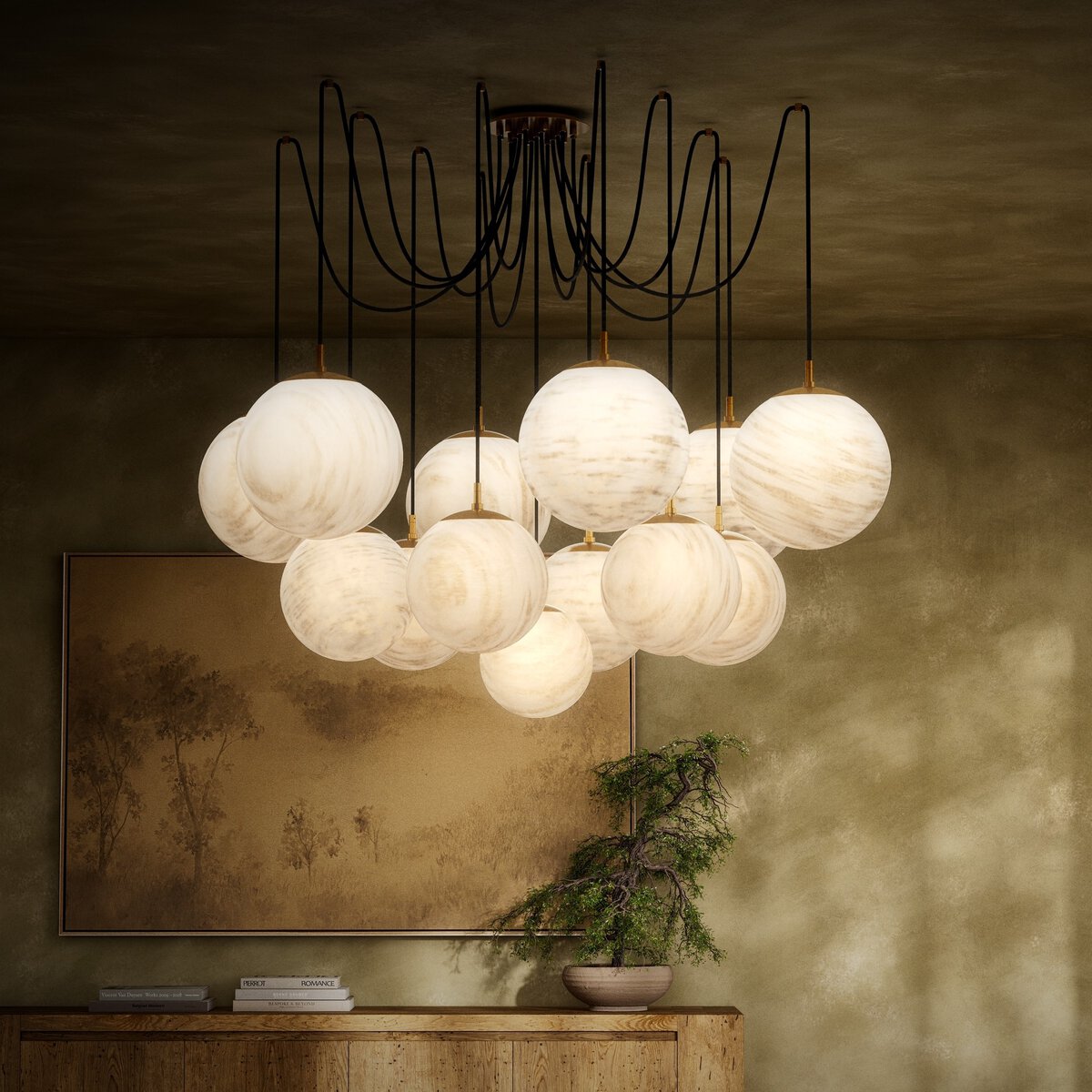
Lighting does more than help you see. It sets the mood, defines how a room feels, and quietly shapes how you experience your home day to day. The right mix of chandeliers, sconces, table lamps, and floor lamps can make a space feel calm, layered, and intentional instead of flat or overly bright.
Here’s how to choose lighting that works, room by room.

Start With Layers, Not Just One Light
The biggest mistake people make with lighting is relying on a single overhead fixture. Good lighting is layered. Think of it in three parts:
- Ambient lighting is the main source of light. This includes chandeliers, pendants, or flush mounts.
- Task lighting is focused light for reading, cooking, or working.
- Accent lighting adds warmth and depth, highlighting corners, art, or architectural details.
Most rooms need at least two of these layers. The best spaces usually have all three.

Entryway and Hallway Lighting
First impressions matter.
A chandelier or pendant in the entry sets the tone for the entire home. Choose something that reflects your style without overpowering the space.
Wall sconces in hallways create rhythm and guide movement through the home while keeping the light soft and welcoming.
Table lamps on consoles add warmth and help entry spaces feel lived in, not transitional.

Living Room Lighting
The living room should feel flexible. Bright enough for conversation and everyday use, softer in the evening.
Chandeliers or pendants work well if the room has high ceilings or an open layout. Choose something sculptural but not overpowering. It should anchor the space without stealing attention from the furniture.
Floor lamps are essential. Place them near seating to create cozy zones, especially next to sofas or reading chairs.
Table lamps add warmth and balance. Use them on side tables or consoles to soften the room and avoid harsh overhead light at night.
If possible, wall sconces can replace some lamps and free up surface space while adding a custom feel.

Dining Room Lighting
The dining room is where a chandelier really shines.
Choose a chandelier or pendant that is centered over the table, not the room. The scale should relate to the table size, not the ceiling height alone. As a general rule, the fixture should be about half to two thirds the width of the table.
Hang it low enough to feel intimate but high enough to keep sightlines clear. Dimmers add a nice touch for flexibility with everyday meals and gatherings.
If the room is large, sconces on the walls can add glow and depth without competing with the main fixture.

Kitchen Lighting
Kitchens need both function and warmth.
Chandeliers provide ambient lighting while pendant lights over an island provide focused task lighting and visual rhythm. Choose simple shapes if your kitchen already has strong materials or finishes.
Under cabinet lighting is one of the most useful upgrades you can make. It keeps countertops bright and practical.
In eating nooks or breakfast areas, a small chandelier or pendant helps define the space and makes it feel separate from the rest of the kitchen.

Bedroom Lighting
Bedrooms should feel calm and layered, never harsh.
Table lamps on nightstands are the most common choice and offer symmetry and softness. Make sure the lamp height works with your headboard so the light hits at a comfortable level.
Wall sconces are a great alternative to table lamps, especially in smaller rooms. They free up space and feel intentional.
Floor lamps can be used in corners or near chairs to add ambient light without relying on overhead fixtures.

Bathroom Lighting
Bathrooms need clear, even light without feeling clinical.
Wall sconces placed on either side of the mirror give the most flattering light for daily routines. This reduces shadows compared to a single light above the mirror.
Overhead lighting should be soft and supportive, not the main focus.
If space allows, a small decorative fixture can add personality, especially in powder rooms.
Final Tips to Keep in Mind
Always consider scale. A light that is too small will feel like an afterthought, while one that is too large can overwhelm the room.
Use warm light temperatures in living spaces and bedrooms for a softer feel.
Lighting should support the room, not compete with it.
Need help choosing the right pieces?
That’s where we come in. Visit our Montrose or Heights studios to meet with a Native Citizen interior designer—complimentary, always. We’ll help you create a home that’s beautiful, functional, and ready for real life.
Ordering online? Enjoy our complimentary white glove delivery service.
Working with us as a design client? We take care of it all—from in-home measurements to furniture placement, art, and decor installation with expert precision and care. You dream it, we install it when you sign up for the design passport at our studios.


