

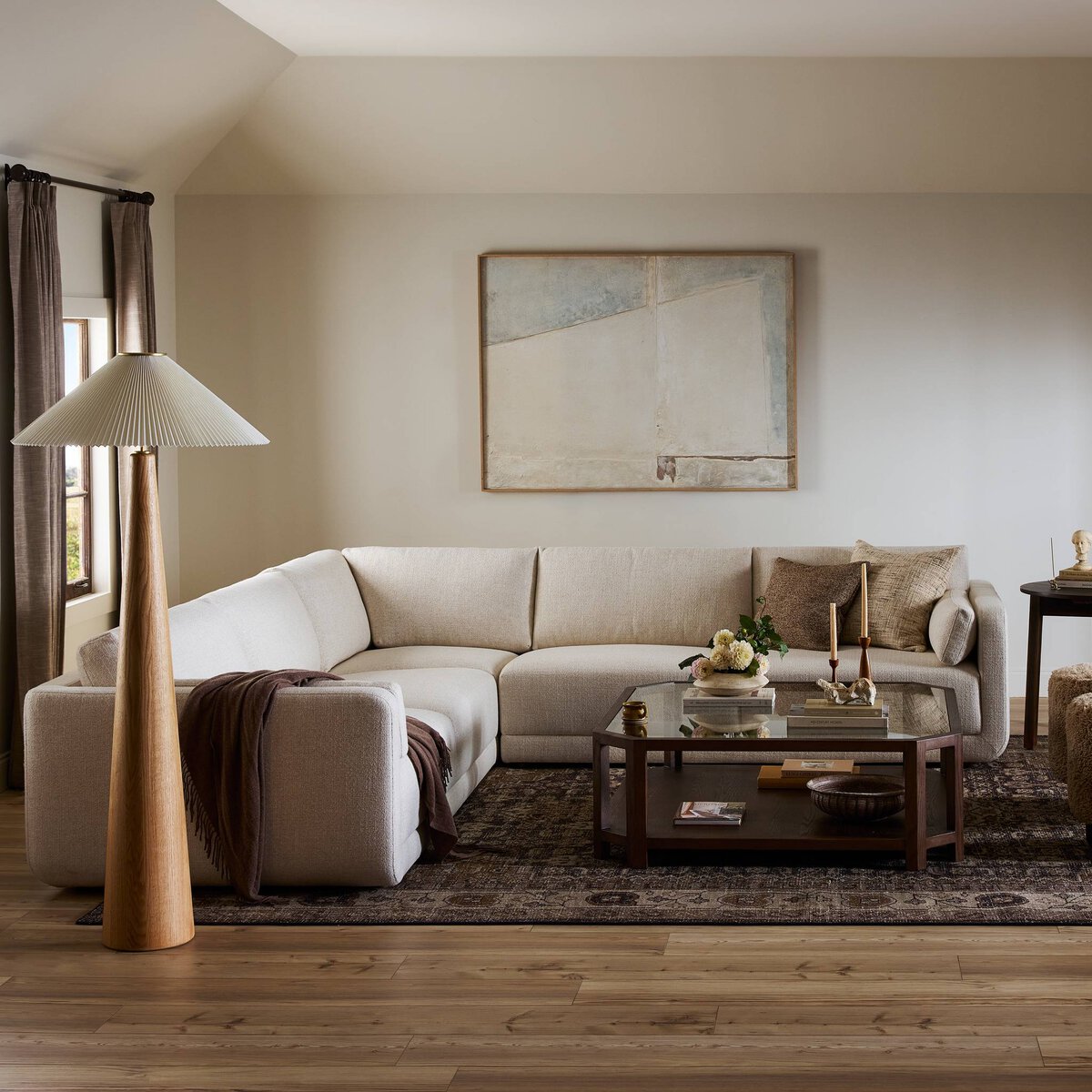
Interior styles give direction, but they are not meant to box you in. The best spaces often blend influences in a way that feels natural and personal. Here is a breakdown of some of the most common interior styles and what defines them.
Modern
Modern design is rooted in clean lines and simplicity. You will often see neutral color palettes, minimal ornamentation, and an emphasis on form and function. Materials like metal, glass, and smooth woods are common. The overall look feels refined, open, and intentional.
This style works well for those who prefer a clutter-free space with a strong architectural presence.

Contemporary
Contemporary design reflects what is current. It evolves over time, but typically features a mix of clean lines with softer elements. You might see neutral tones layered with subtle texture, curved furniture, and a balance between minimal and comfortable.
It feels fresh, but still livable.
Minimal
Minimalism focuses on reducing everything down to what is essential. Each piece has a purpose, both functionally and visually. Spaces are often light, open, and calm, with a limited color palette and very little excess.
This style is about clarity and restraint, creating a sense of ease in the home.

Traditional
Traditional interiors draw from classic European design. Think rich wood tones, detailed millwork, and more formal furniture silhouettes. Symmetry plays a big role, and the overall look feels timeless and structured.
It is a style that leans into comfort and familiarity.

Transitional
Transitional design sits between traditional and modern. It blends the warmth and familiarity of classic design with the clean lines of modern pieces. The result is balanced, approachable, and versatile.
This is one of the most popular styles because it feels both current and timeless.

Industrial
Industrial design is inspired by warehouses and urban spaces. It highlights raw materials like exposed brick, metal, and concrete. Furniture tends to have a more utilitarian feel, with simple forms and darker tones.
It brings an edge to a space while still feeling grounded.

Scandinavian
Scandinavian design is known for its simplicity, functionality, and warmth. Light woods, soft textures, and neutral colors define the look. Natural light plays a key role, and spaces feel airy and inviting.
It is minimal, but never cold.

Mid-Century Modern
This style is rooted in design from the mid-1900s. It features clean lines, organic shapes, and a mix of natural and manmade materials. Warm woods, tapered legs, and subtle pops of color are common.
It feels retro, but still relevant.

Organic Modern
Organic modern blends clean, modern lines with natural materials and softer forms. You will see stone, wood, linen, and curved silhouettes. The palette is often neutral, with an emphasis on texture.
This style feels calm, elevated, and connected to nature.

Finding Your Style
We don't believe in just one style. Every piece you see is part of the home collection we carry at Native Citizen. If you want to explore different styles in person, visit our Montrose showroom. Seeing materials, textures, and scale up close can help you define what feels right and bring your vision into focus.
Make it even easier, sign up for our free design services at Native Citizen to define your space and make it feel like yours in as little as 7 days after your first appointment. We make living feel simple.


